

 Every inventor starts in the same place: an idea that feels obvious once you see it.
“Why doesn’t this exist already?”
“Someone has to be doing this wrong.”
But the part most people never see is what happens after that first spark.
At Axis International, we’ve worked with hundreds of product ideas over the years—and while every invention is different, the journey from idea to prototype follows a pattern that’s far more thoughtful (and far messier) than most people expect.
This is what really happens behind the scenes.
The Idea Is Rarely the Final Product
The biggest misconception inventors have is that their first idea is the finished product.
In reality, the original concept is just a starting point. Before anything is built, we spend time understanding how the product would live in the real world. Who is using it? Where is it stored? How often is it handled? What happens if it’s dropped, overloaded, or used incorrectly?
Many ideas evolve at this stage—not because they’re bad ideas, but because real-world use reveals details that sketches can’t.
This early refinement is one of the most important (and least glamorous) parts of product development.
Design Meets Reality
Once an idea moves forward, it enters the phase where creativity meets constraints.
Materials matter. Costs matter. Manufacturing limitations matter. A design that looks perfect on paper may need to be adjusted to meet safety standards, shipping realities, or price points that make sense for retail or e-commerce.
These changes can feel uncomfortable at first—but they’re not about compromising the idea. They’re about protecting it.
A product that can’t be made consistently, affordably, or reliably won’t survive in the marketplace.
Prototypes Are Learning Tools, Not Finish Lines
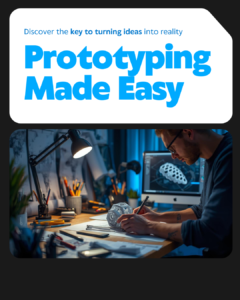 Most people imagine one prototype.
In truth, prototypes come in versions. Each one answers a different question:
Some prototypes succeed. Others fail—and those failures are incredibly valuable. Every adjustment made at this stage saves time, money, and frustration later.
Testing Happens Like Real Life (Not a Demo)
A product doesn’t just need to work once. It needs to work over and over again, in less-than-ideal conditions, with users who don’t read instructions.
That’s why testing is intentionally practical. Products are used, stressed, handled, stored, and shipped in ways that mirror real customer behavior.
When something breaks or feels awkward here, it’s a win. It means the issue was caught before launch.
A Prototype Is a Beginning, Not the End
By the time a prototype is approved, the product has already been shaped by experience, testing, and real-world thinking. That prototype becomes the foundation for manufacturing, packaging, branding, and eventual market placement.
This behind-the-scenes work is what separates ideas that stall from products that succeed.
The Part No One Talks About
There’s no shortcut to this process—and there shouldn’t be.
Great products aren’t rushed into existence. They’re questioned, tested, adjusted, and improved long before a customer ever sees them. At Axis International, this is the part of the journey we care about most—because execution is what turns an idea into something real.
And real products change lives in small, practical ways every day.
Comments are closed